


The world of shipping is changing faster than ever, and every business – big or small – must stay ready for what’s coming next. Whether you sell products online, run a manufacturing company, or move goods daily, freight shipping services are going to look very different in the coming years.
You’ll see more automation, smarter tracking, greener transport, and faster deliveries becoming the standard. Customers today expect transparency and speed, and that pressure is only going to increase. This means businesses can’t rely on old-school methods anymore – they need systems that are quick, digital, and reliable.
Staying updated isn’t just an advantage now. It’s a necessity if you want your shipments to stay smooth and your customers to stay happy. This blog breaks everything down in simple words so you clearly understand what to prepare for.
What’s Changing in the World of Shipping
Shipping is no longer just about transporting boxes from Point A to Point B.
Today, it’s about speed, tracking, automation, and customer expectations. People want to know exactly where their parcel is and exactly when it will reach. Businesses want cheaper, faster, and more efficient movement of goods.
Because of all this, the logistics industry is going through a major transformation. On top of that, global trade has become more connected than ever, which means shipments are moving across more countries, more checkpoints, and more systems.
This creates both opportunities and challenges. Delays, paperwork, and supply chain disruptions are common, so companies now need better tools and smarter processes to keep everything running smoothly.
The whole industry is shifting toward solutions that are quicker, more transparent, and far more reliable than before.
Technology Leading the Way
If there’s one thing shaping the future, it’s technology. Here’s how:
a) Real-Time Tracking
Customers don’t want vague updates like “order dispatched.” They want live tracking.
With better GPS, AI, and smart sensors, freight shipping services will offer instant location updates for every shipment.
b) Automation Everywhere
From automated sorting in warehouses to driverless delivery vehicles, automation is becoming the backbone of logistics.
This means fewer errors, faster processing, and lower costs.
c) AI-Powered Route Planning
No more guesswork.
AI will calculate the fastest, safest, and most cost-effective route in seconds. This helps reduce delays and fuel costs – a massive benefit for businesses.
Sustainability Will No Longer Be Optional
In the next few years, eco-friendly shipping won’t just be a “nice idea” – it will be a requirement.
Governments, customers, and global regulations will push companies to reduce carbon footprints. This means:
- Electric delivery vehicles
- Eco-friendly packaging
- Clean-energy warehouses
- Smarter fuel use
Freight shipping services will need to balance speed and sustainability – and businesses must prepare to adapt.
The Rise of Smart Warehousing
Warehousing is getting smarter, and it’s happening fast.
- Robots will handle picking and packing
- Sensors will monitor inventory 24/7
- Automated racks will increase storage capacity
- AI will predict demand so stock never runs out
This reduces human error and speeds up operations, helping companies deliver faster.
Faster, Cheaper, Smarter Deliveries
Beyond technology and sustainability, here are big shifts businesses will see:
a) Same-Day and Next-Day Will Become the Norm
With better transport networks and smart planning, customers will expect extremely fast delivery.
b) Multi-Mode Shipping
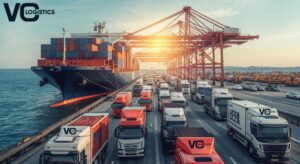
Ships + trucks + trains + flights – all synced together smoothly.
This reduces delays and cuts costs.
c) Better Global Connectivity
Markets will become more connected, making international shipping easier and more affordable.
Challenges Businesses Must Prepare For
While the future looks exciting, it also brings some challenges:
- Higher demand for skilled workers who understand technology
- Rising fuel costs
- Global supply chain risks
- Compliance with new environmental regulations
- Need for better cybersecurity
Businesses that prepare early will stay ahead. Unexpected delays and disruptions can also become more common as global networks get more complex.
There’s also growing pressure to deliver faster without increasing costs, which isn’t always easy.
That’s why companies need strong systems and smart planning now, so they’re ready for whatever comes next.
How to Stay Ahead
Here’s what businesses can do right now:
- Invest in technology like tracking tools, automation, and AI
- Choose reliable freight shipping services that offer transparency and speed
- Train teams to handle new systems
- Adopt eco-friendly practices early
- Strengthen supply chain partnerships
Being future-ready isn’t about big budgets; it’s about smart planning. Start by improving small processes – even tiny upgrades can make a big difference over time.
Stay informed about new trends so you’re never caught off guard.
And most importantly, stay flexible, because the businesses that adapt quickly are the ones that stay ahead.
Final Takeaway
The future of shipping and logistics will be fast, digital, sustainable, and customer-focused. Businesses that understand this shift today will grow stronger tomorrow.
And if you’re looking for smooth, reliable, and future-ready logistics support – VO Logistics is here to help you move with confidence.
Staying prepared doesn’t require big changes overnight – it just needs small, smart steps in the right direction. The sooner businesses start adopting new tools, greener practices, and better shipping partners, the easier it becomes to handle the future.
The goal is simple: keep things moving smoothly, efficiently, and without stress.
FAQs
1. What is the biggest future trend in logistics?
Automation and AI-powered systems are the biggest trends, helping shipments move faster with fewer errors.
2. How will freight shipping services change?
They will become smarter with real-time tracking, better route planning, and more eco-friendly options.
3. Is sustainability important in shipping?
Yes, it’s becoming essential. Companies will need eco-friendly vehicles, packaging, and cleaner operations.
4. Will deliveries become faster in the future?
Absolutely. Same-day and next-day deliveries will become very common due to better planning and automation.
5. How can businesses prepare for logistics changes?
By adopting new technology, choosing reliable shipping partners, training staff, and planning for sustainability.
Copyright: All rights reserved. Unauthorized reproduction or distribution of any content on this site is prohibited. For permissions, please contact https://www.virtualoplossing.net/